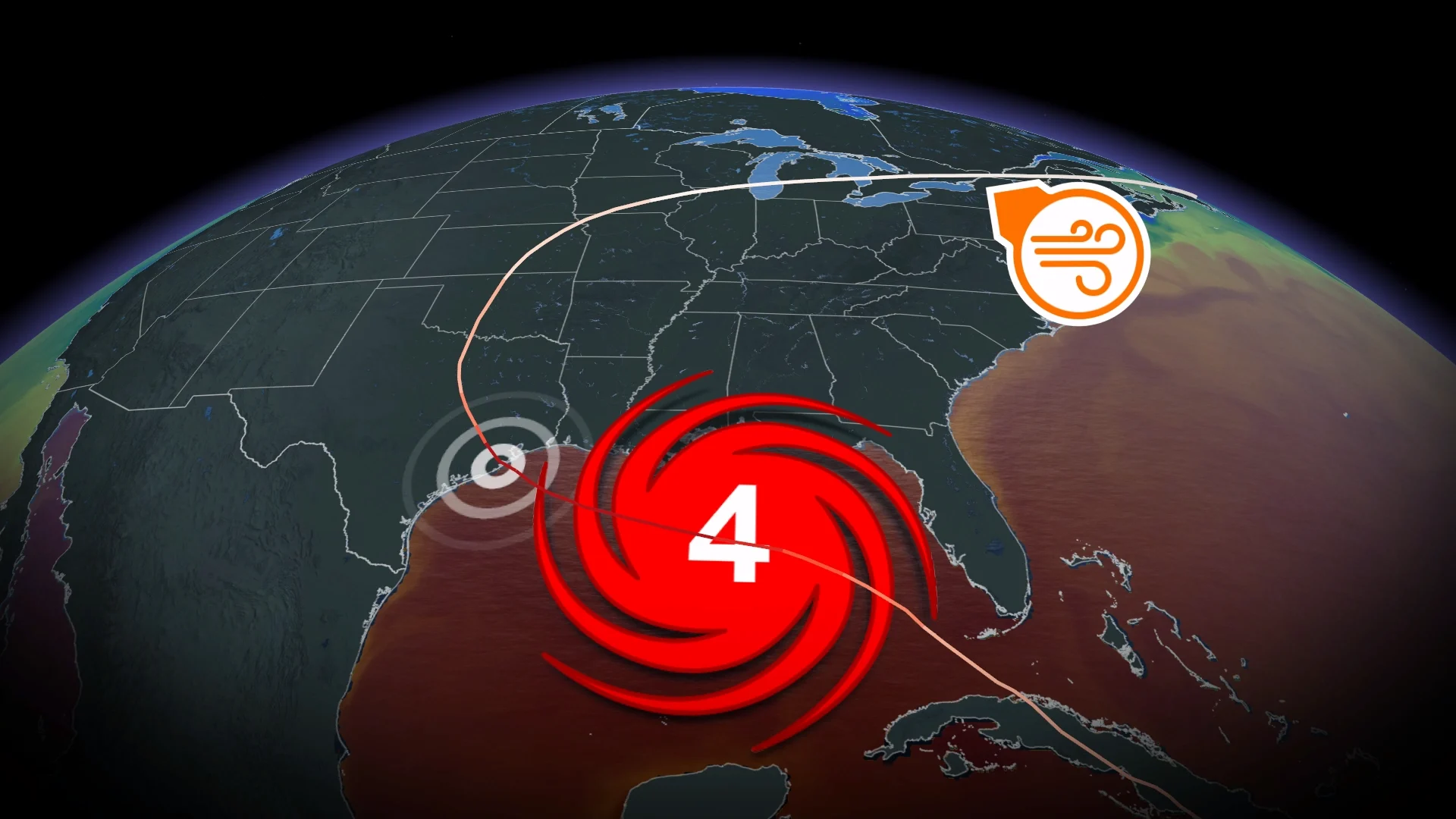
The U.S.’s deadliest disaster brought destruction to Canada

More than 8,000 people died when a devastating hurricane hit Galveston, Texas
The hurricane that tore through Galveston, Texas, on the night of Sept. 8, 1900, remains the deadliest natural disaster in American history.
A tremendous storm surge washed over the low-lying barrier island along the Texas coast, killing more than 8,000 people and destroying some 3,500 homes.
Destruction didn’t stop south of the border. The unnamed hurricane transitioned into a powerful post-tropical cyclone and claimed hundreds of lives as the high winds and flooding rains swept into Canada.
DON'T MISS: How a mammoth hurricane rapidly intensifies in mere hours
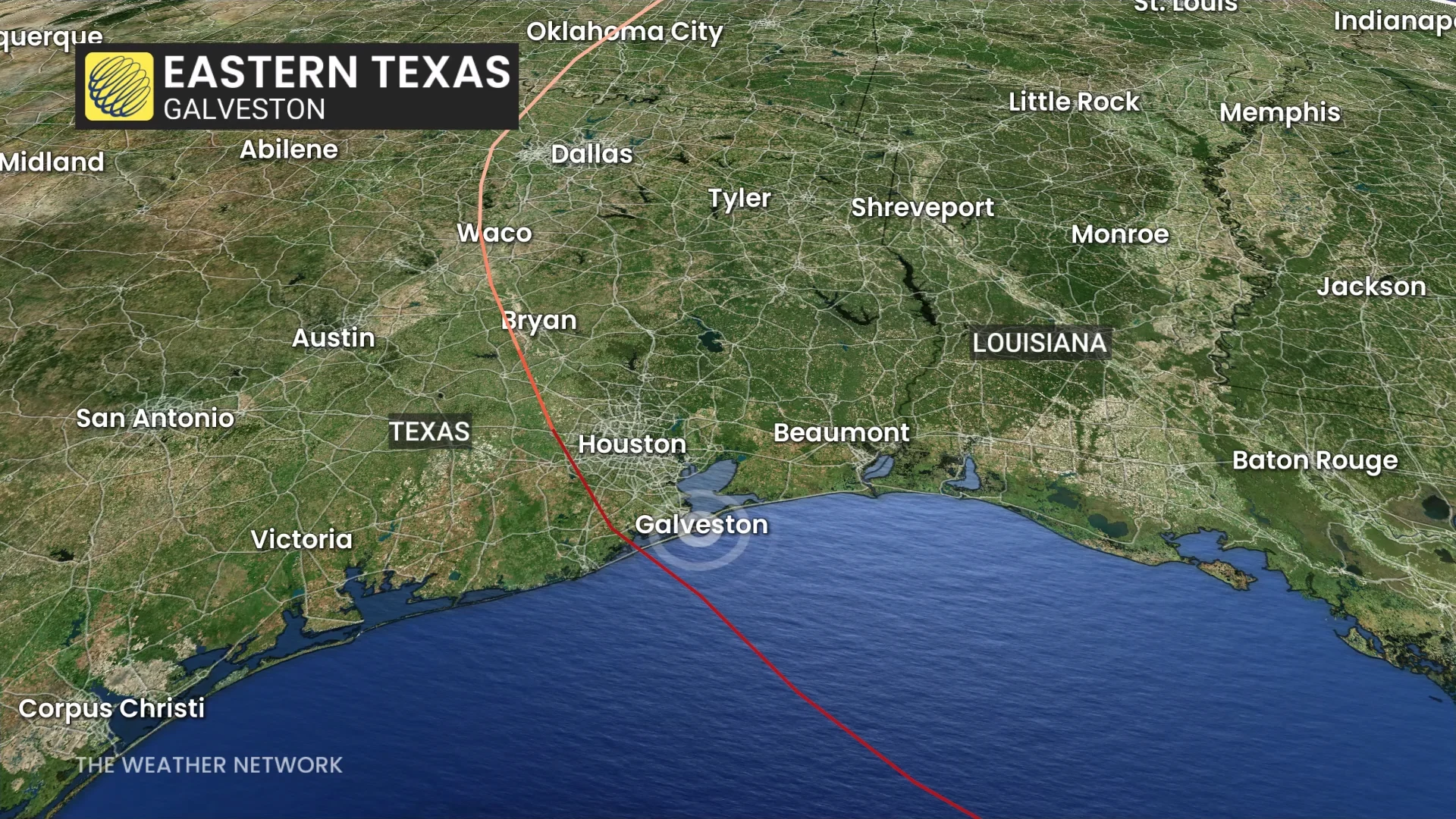
Galveston is a port city and popular tourist destination located on a barrier island a short drive from the city of Houston.
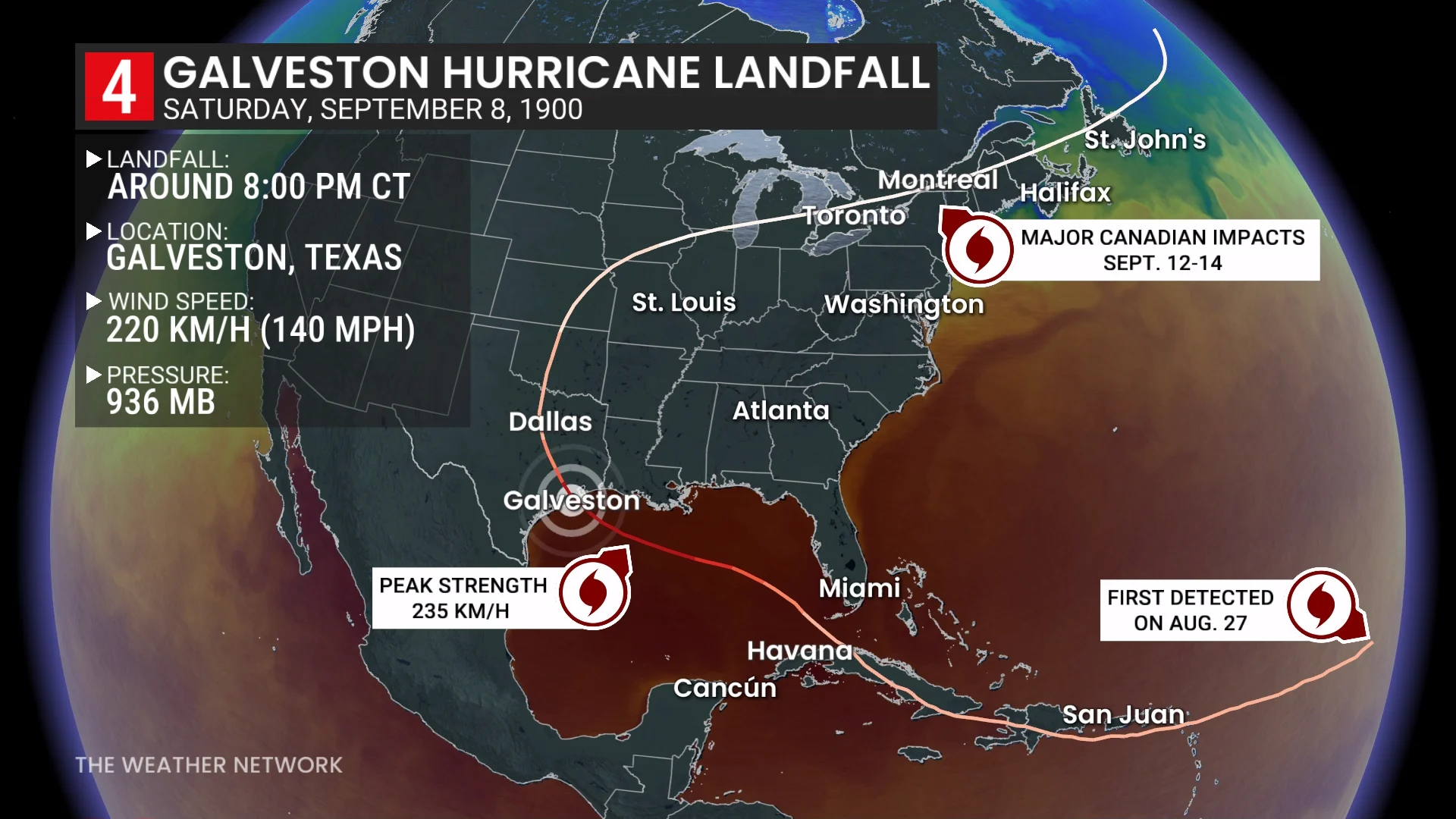
Sailors first reported a tropical storm east of the Leeward Islands on Aug. 27, likely a classic disturbance that rolled off the African coast and slowly developed as peak hurricane season arrived.
This system moved west over the following week, bringing heavy rain and gusty winds to the Greater Antilles before traversing the length of Cuba on Sept. 3-4.
Hurricanes largely struck by surprise in the days before modern technology. The only inkling of danger on the horizon came from a report of a storm over Cuba received at the Galveston Weather Bureau.
Concerned that the storm might soon arrive, the bureau’s chief hoisted hurricane warnings on Galveston Island on Sept. 7. He had no way of knowing that the unnamed storm had rapidly intensified into a Category 4 hurricane as it crossed the warm Gulf of Mexico.
The eye of the storm tracked just southwest of the city proper, putting the highest winds and worst storm surge directly into the most populous part of the region. A storm surge as much as 4.5 metres above sea level began overtaking the barrier island, significantly deeper than Galveston’s highest point at the time.
RELATED: Hurricane remnants can bring dangerous weather deep into Canada
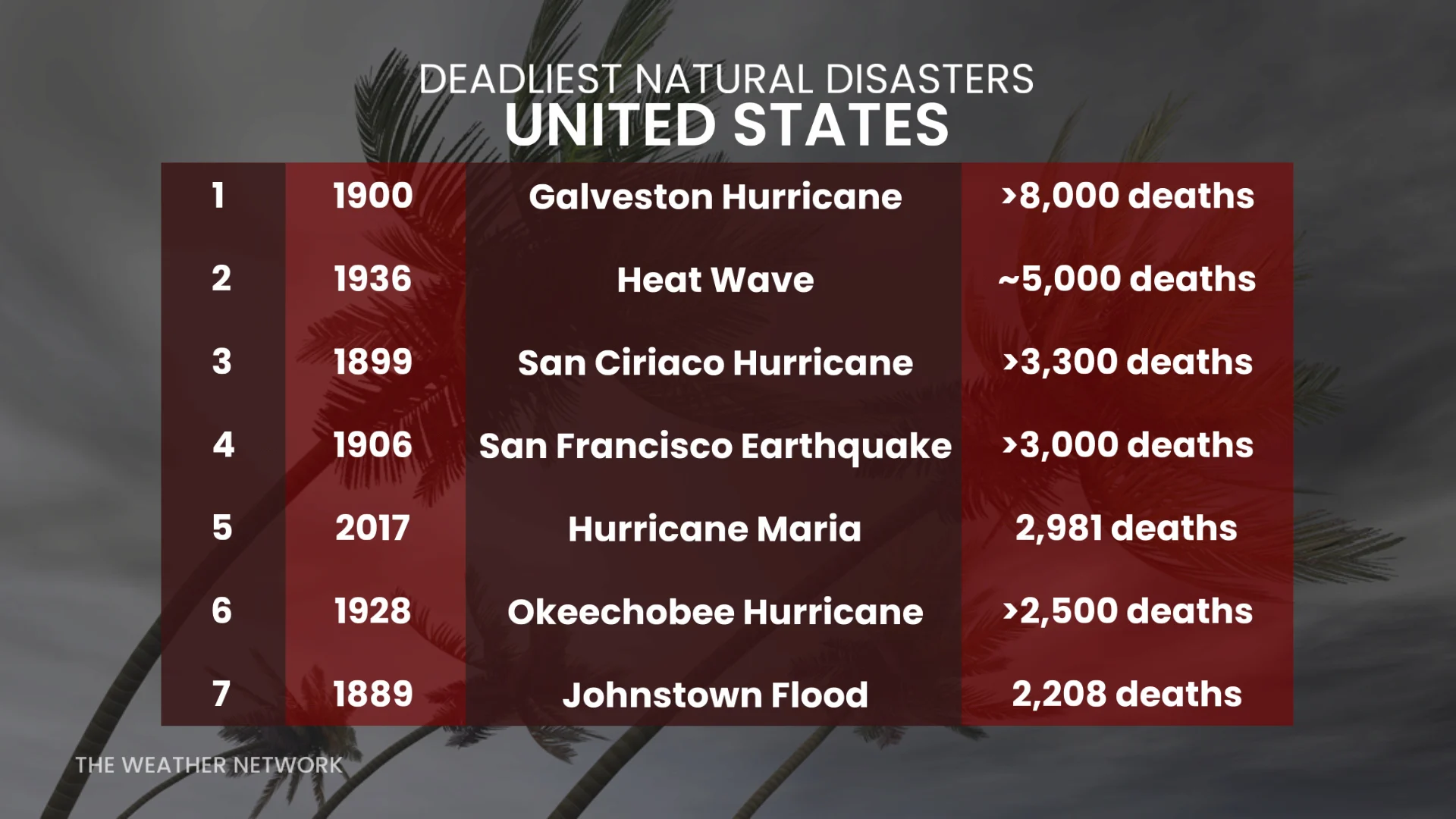
Authorities estimate that more than 8,000 people died in the hurricane’s flooding and winds, accounting for a significant percentage of Galveston’s population at the time. The event remains the deadliest natural disaster in U.S. history.
Destruction continued long after landfall. The hurricane’s remnants moved through the Plains states and curved toward the Great Lakes as a powerful post-tropical cyclone by Sept. 12-13.
Intense winds and flooding rains crossed into Canada, causing structural damage and significant crop losses across southern Ontario. Parts of Quebec saw as much as 100 mm of flooding rains. The storm’s relentless winds caused numerous shipwrecks throughout Atlantic Canada, claiming as many as 200 lives.